HOW IT WORKS
How it works
How Milwaukee's streets, buses, and trains get planned, paid for, and built, in plain language, and where you can have a say.
- 1
Idea
Proposed in a long-range plan. No one is designing it yet.
- 2
Planned
Being studied, planned, or designed. Money to build it has not been approved.
- 3
Funded
Money to build it has been approved or set aside. Construction has not started.
- 4
Being built
Under construction now.
- 5
Open
Built and in use.
The money step is the big one: a plan can sit at Planned for years until a budget or a grant pays to build it.
Explainers
Deep dives with infographics and sources, newest first.
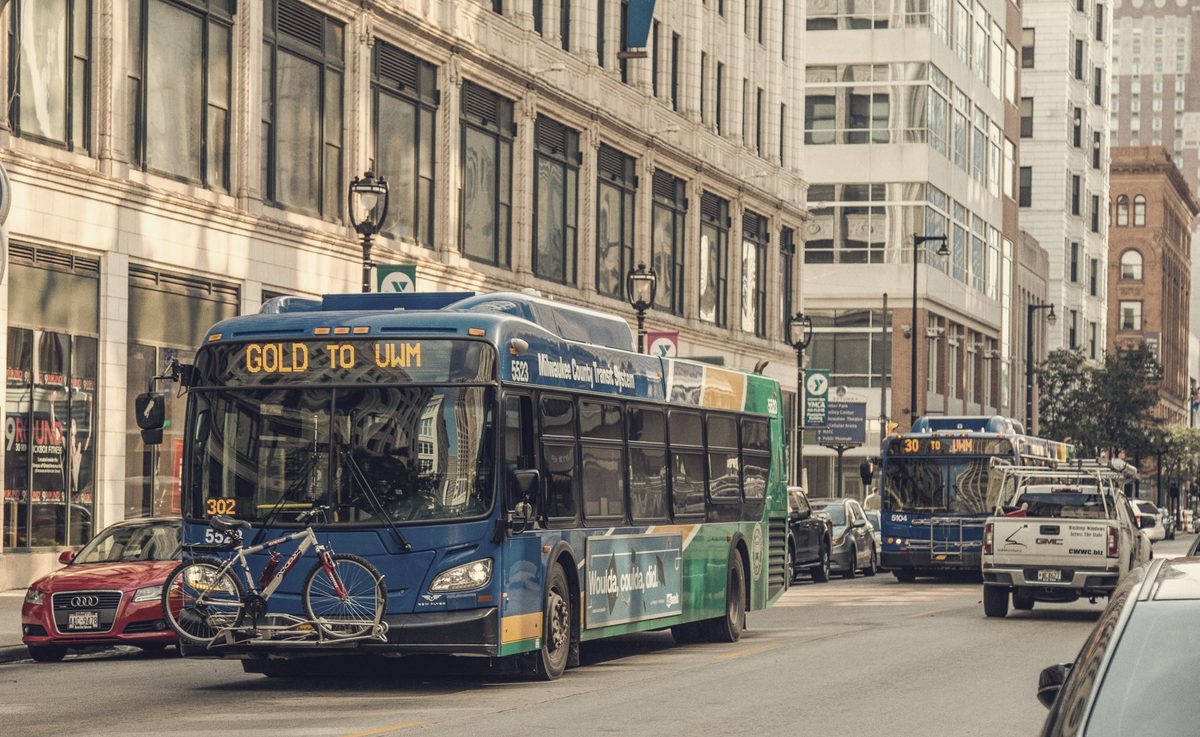
Common projects, explained
Most of what City Hall and the County vote on is one of these kinds. Tap one for what happens, who decides, how long it takes, and how to have a say.
GETTING AROUND
Street rebuildsCrews tear out a worn street, including the ground right under it, and build a new one. Sometimes the street gets a new shape too.
- A full rebuild (reconstruction) replaces the pavement and the layer of ground under it. It can also straighten curves, smooth hills or widen the street.
- A pavement replacement removes every layer of pavement and lays new pavement, but leaves the ground underneath alone.
- Expect closures or detours, because the old street is removed. Repaving is different: it only puts a new top on the old street.
- Who decides
- WisDOT runs state highway projects. On city streets, Department of Public Works engineers decide whether a street needs a rebuild or only repaving, and the Common Council votes on the money.
- Your say
- For city projects, a public hearing is held once costs are estimated, and alders often send a postcard survey or hold an evening meeting first. For WisDOT projects, use the comment form or public meeting listed on the project's web page.
Milwaukee fact: Milwaukee's Department of Public Works takes care of about 1,400 miles of streets, about 4,000 alleys and about 2,500 miles of sidewalk.
Sources: WisDOT, Highway Improvement Type Definitions · WisDOT, Improvement information · City of Milwaukee, The Process Behind Road Construction
RepavingCrews put a fresh layer of pavement on a street that still has a solid base. It is faster and cheaper than a rebuild.
- Resurfacing puts a new top on the existing street. Crews often grind off (mill) the worn top layer first, then lay new asphalt on what is left.
- Smaller preservation work fills cracks, seals the surface and fixes joints to slow down damage.
- Milwaukee's High Impact Paving program, started in 2013, repaves busy streets for about one third the cost of a full rebuild.
- Who decides
- The Department of Public Works picks streets using inspections, a pavement condition score and requests from residents. The Common Council votes on the paving resolutions.
- Your say
- Report bad pavement to the city, because requests from residents and alders help flag streets. You can also speak at the public hearing held before a project is approved.
Milwaukee fact: The High Impact program repaves about 13 to 15 miles of street a year, compared with about 4 miles a year of local street rebuilds.
Sources: WisDOT, Facilities Development Manual 11-1, Attachment 10.1 · WisDOT, Highway Improvement Type Definitions · City of Milwaukee, The Process Behind Road Construction
BridgesBridges get regular safety inspections, small fixes that help them last, big repairs, or a whole new bridge.
- Preventive work is the cheaper kind that adds years: sealing joints, thin new layers on the deck and spot painting steel.
- Rehabilitation is major work that restores a bridge's strength. Replacement means building a new bridge in the same place.
- In a bridge number like B-40-0281, B means a bridge longer than 20 feet and 40 is Milwaukee County's number on WisDOT's county list. P marks an older structure with no plans on file.
- Who decides
- Federal rules require the inspections. WisDOT handles state bridges. City bridge projects that use state or federal money need an agreement with WisDOT that the Common Council approves.
- How long
- Most bridges must be inspected at least every 24 months, every 12 months if in poor shape, and up to every 48 months for some bridges in good shape. A new bridge deck lasts about 25 to 45 years.
- Your say
- For a WisDOT bridge, use the comment form or public meeting on its project page. For a city bridge, contact your alder before the Public Works Committee votes.
Milwaukee fact: Every bridge number in Milwaukee County has a 40 in it, because Milwaukee is county number 40 on WisDOT's list.
Sources: WisDOT Bridge Manual, Chapter 2 (structure numbers) · WisDOT Bridge Manual, Chapter 42 (bridge preservation) · 23 CFR 650.311, inspection intervals · WisDOT, County Code Table
Intersections and safetyChanges that slow cars down and make crossing the street safer, like speed humps, traffic circles, curb bump-outs and new signals.
- Speed humps are raised strips of asphalt on quieter streets (about 3,000 cars a day or fewer) that slow traffic to 10 to 15 mph. Busier streets can get flat-topped speed tables.
- Other tools include traffic circles, curb bump-outs that shorten crossings, zigzag lanes (chicanes) and islands where people can wait halfway across.
- Milwaukee adopted Vision Zero in 2022. Its goal is zero traffic deaths and life-changing injuries by the end of 2037.
- Who decides
- The Department of Public Works studies speeds, traffic and crashes and recommends a design. The Common Council's Public Works Committee votes on building it and on what nearby owners pay.
- How long
- A request from residents takes at least six months and can take more than a year. Building happens from mid-April to mid-October.
- Your say
- Neighbors can request traffic calming by sending the city's form to TrafficCalming@milwaukee.gov with signatures from at least half the addresses on the block. Then answer your alder's postcard survey or speak at the hearing.
Sources: Milwaukee DPW, Community-Led Traffic Calming Guidebook (April 2026) · City of Milwaukee, Community-Led Traffic Calming · City of Milwaukee, Vision Zero
Biking and walkingDecisions about bike lanes, sidewalks, crosswalks and trails, and how streets are designed to keep people safe on foot and on bikes.
- The Department of Public Works designs city streets. The city's 2018 Complete Streets policy says streets should work for people walking, biking, riding the bus and driving.
- The city set a goal of 50 miles of protected bike lanes built or planned by 2026, on streets such as Hopkins Street and Oklahoma Avenue.
- A protected bike lane puts something solid, like posts, curbs, planters or parked cars, between bikes and moving traffic. A painted lane uses only a painted line.
- Who decides
- City street changes go to the Common Council's Public Works Committee, then the full Council and the mayor. The Oak Leaf Trail belongs to Milwaukee County Parks, so trail items go to the County Board.
- Your say
- Contact your alder before the Public Works Committee votes, or speak at the meeting. For speed humps on your block, neighbors can file a traffic calming request with signatures from at least half the addresses.
Milwaukee fact: In 1939, a bike fan named Harold "Zip" Morgan laid out a 64-mile route that grew into the Oak Leaf Trail. Today the trail is more than 135 miles long.
Sources: City of Milwaukee DPW, Complete Streets · City of Milwaukee DPW, Bikeways · Milwaukee County Parks, Oak Leaf Trail
TransitDecisions about how buses, the streetcar and trains run in Milwaukee, who pays for them, and what riders will notice.
- Milwaukee County owns the MCTS buses. Milwaukee Transport Services, a nonprofit organization the county set up, runs them day to day.
- The City of Milwaukee owns The Hop streetcar. The city's Department of Public Works oversees it, and a contractor operates it.
- Bus money comes from fares, state aid, federal grants, a county vehicle registration fee and county property taxes. Many items accept grants or change service.
- Who decides
- Bus items go to a committee, then the 18-member County Board, and the County Executive signs or vetoes them. Streetcar items go to the 15-member Common Council and the mayor.
- Your say
- Sign up to speak at a County Board committee meeting, in person or online, or look up your county supervisor by home address and email them.
Milwaukee fact: CONNECT 1 was Milwaukee County's first battery-electric bus line. Each of its buses can go up to 247 miles on one charge.
Sources: MCTS, Who We Are · MCTS, Bus Rapid Transit · Milwaukee County 2027 Requested Budget, Transit · WisDOT, Chicago-Milwaukee passenger rail facts
Streets, alleys and parkingDecisions about public land: giving up (vacating) a street or alley, updating the city's Official Map, and changing parking rules.
- To vacate a street or alley means the city gives it up as a public way. The land then belongs to the property owners next to it.
- The Official Map shows where streets, parks and other public land are and how wide they are. It can only change after a public hearing.
- Parking rules are changed by ordinance, a city law the Common Council votes on.
- Who decides
- The Common Council votes. If owners next to a street or alley file written objections to vacating it, it takes a two-thirds vote.
- How long
- The hearing on a vacation must be at least 40 days after it is introduced, and owners next to it must get notice at least 30 days before.
- Your say
- Speak at the public hearing. If you own property next to the street or alley, you can file a written objection with the City Clerk.
Milwaukee fact: A street or alley can't be vacated if it would leave a lot with no way to reach a street.
Sources: Wis. Stat. 66.1003, discontinuing a public way · Wis. Stat. 66.1005, effect of discontinuance · Wis. Stat. 62.23(6), Official Map
BUILDINGS, MONEY, AND THE REST
Zoning and new buildingsDecisions about what can be built on a piece of land, approvals for custom building plans, and protection for historic buildings.
- A rezoning moves a property into a different zoning district on the city's zoning map, for example from Industrial-Heavy to Industrial-Mixed, so different uses are allowed.
- A Detailed Planned Development (DPD) is a custom set of zoning rules tied to one site plan. Small changes to it come later as "minor modifications."
- The Historic Preservation Commission can recommend making a building or district historic, and the Common Council decides. After that, changes to the outside need the commission's approval.
- Who decides
- The City Plan Commission makes a recommendation. Then the Zoning, Neighborhoods and Development Committee holds a hearing and votes, the full Common Council votes, and the mayor signs. Historic designations start at the Historic Preservation Commission instead.
- How long
- Two 2026 rezonings took about 10 to 12 weeks from introduction to the mayor's signature.
- Your say
- State law requires a public hearing with published notice before any zoning change, and the City Clerk mails notices to nearby owners. You can speak at the hearing, send written comments, or contact your alder.
Sources: Wis. Stat. 62.23, city planning and zoning · Common Council File 251867, a 2026 rezoning (action history) · Common Council File 252190, a Detailed Planned Development · Common Council File 240590, a historic district designation
HousingDecisions about public housing, help paying rent, and homelessness programs run by the Housing Authority and Milwaukee County.
- The Housing Authority of the City of Milwaukee (HACM), started in 1944, runs more than 4,000 public housing and tax credit apartments, plus vouchers that help nearly 6,000 households pay rent.
- In public housing, a family's rent is usually 30% of its income after certain deductions. A voucher pays part of the rent for a home rented from a private landlord.
- Milwaukee County Housing Services has used Housing First since late 2015: people get a place to live first, then are offered services like health care and job training.
- Who decides
- HACM is run by a 7-member Board of Commissioners appointed by the mayor and confirmed by the Common Council. County housing items go to the Milwaukee County Board.
- Your say
- Speak or send written comments at HACM's yearly public hearing on its plan, which must be posted at least 45 days before the hearing. You can also contact your alder or county supervisor.
Milwaukee fact: Westlawn, opened in 1952 with 726 apartments, is described by HUD as Wisconsin's largest public housing development. It has been rebuilt as Westlawn Gardens.
Sources: HACM, Mission and History · 24 CFR 5.628, how tenant rent is calculated · 24 CFR 903.17, public hearing on the housing authority plan · Milwaukee County DHHS, Housing First · HUD User, Westlawn Gardens case study
Development dealsDecisions about how the city uses tax tools, land sales and agreements to get buildings and public projects built.
- Tax Incremental Financing (TIF): the new property taxes that come from growth inside a district pay back the project's costs. When the costs are repaid, or the time limit runs out, the district closes.
- Creating or changing a district takes a project plan, a public hearing, approval from a Joint Review Board of the local taxing bodies, and a Common Council vote.
- The Council also approves sales of city-owned land, often property the city took for unpaid taxes, and each Business Improvement District's yearly plan.
- Who decides
- The Redevelopment Authority of the City of Milwaukee (RACM) holds the TIF hearing, and a Joint Review Board must approve new districts. Then the Zoning, Neighborhoods and Development Committee and the Common Council vote, and the mayor signs.
- How long
- A TIF district can last up to 27 years if it was created to fix rundown areas, or 20 years for industrial or mixed-use districts.
- Your say
- State law requires a public hearing with published notice before a TIF district or plan change is approved. You can also comment at the committee meeting or contact your alder.
Milwaukee fact: Milwaukee used about $59 million in TIF money to build the first phase of The Hop streetcar.
Sources: Wis. Stat. 66.1105, Tax Increment Law · Wis. Stat. 66.1109, Business improvement districts · Common Council File 250733, creating TID No. 129 · Wisconsin Policy Forum, The Use of TIF for Milwaukee's Streetcar (2019)
Budgets and grantsDecisions about how the city and county raise and spend money, from the yearly budget and property taxes to accepting grants and moving funds.
- Each fall the mayor proposes a city budget. The Finance and Personnel Committee holds hearings, and the Common Council changes and adopts it in November.
- The property tax levy is the total property tax the city collects in a year.
- During the year, the Council votes to accept grants and move money between accounts.
- Who decides
- The 15-member Common Council adopts the city budget, and the mayor can veto parts of it. A two-thirds vote of the Council overrides a veto. The 18-member County Board and the County Executive follow the same pattern for the county budget.
- How long
- State law says Milwaukee must adopt its budget by November 14. The city's budget year starts January 1.
- Your say
- Speak at the fall budget hearings, or contact your alder and county supervisor before the November votes.
Milwaukee fact: Spending money from the city's emergency contingent fund takes a three-fourths vote of all alders: 12 of the 15.
Sources: Wis. Stat. 65.02 to 65.05, first class city budget · Wis. Stat. 65.06(6), contingent fund · Wis. Stat. 59.17, county executive
Studies and reportsBefore a big highway project is built, WisDOT and federal officials study the options and their effects on people and the environment, and ask the public.
- A Planning and Environment Linkages (PEL) study looks at problems and options early, so later reviews can build on that work.
- Under federal environmental law, a project likely to have big effects needs an Environmental Impact Statement. If the effects are unclear, it gets a shorter Environmental Assessment.
- You would notice open houses, maps of options and online comment forms. Reports from city and county departments also land in this group.
- Who decides
- WisDOT leads the study, and the Federal Highway Administration makes the federal decision. The Common Council does not vote on these documents.
- How long
- A draft Environmental Impact Statement is open for comment for 45 to 60 days. An Environmental Assessment is available for 30 days.
- Your say
- Comment at public meetings, through the project's online comment form, or during the formal comment period.
Milwaukee fact: WisDOT says it started the I-43 at National Avenue study after people in the neighborhood asked it to fix safety problems on the ramps.
Sources: 23 CFR Part 771, environmental review procedures · FHWA, Planning and Environment Linkages · WisDOT, I-43 at National Avenue Study
Federal rulesNotices from the U.S. government that affect Milwaukee, like plans for cleaner air and studies of big highway projects.
- The Federal Register is the U.S. government's daily notice board. Federal agencies post new rules and plans there.
- The EPA checks Wisconsin's plans for cleaner air. The Milwaukee area does not yet meet the 2015 limit for ozone, a gas that is the main part of smog.
- The Federal Highway Administration posts a notice when it starts a big study of a highway project, like I-794.
- Who decides
- Federal agencies decide, like the EPA and the Federal Highway Administration. The Common Council does not vote.
- How long
- Each notice has its own comment deadline. Recent ones about Milwaukee gave about a month.
- Your say
- Anyone can comment at regulations.gov. Search for the docket number printed in the notice. Comments can be made public.
Milwaukee fact: Car emissions testing in the Milwaukee area is part of Wisconsin's clean-air plan.
Sources: National Archives, About the Federal Register · EPA, Basic Information about Air Quality SIPs · Federal Register, Wisconsin 2015 ozone plan elements (April 2, 2026) · Federal Register, Notice of Intent for I-794 (December 5, 2025)
State road agreementsA State/Municipal Agreement is the contract that says how the federal government, the state and the city split the cost of a road or bridge project.
- WisDOT calls it the legally binding money contract for a project. It lists the work, each side's share, a cap on state and federal money, and who will maintain the road.
- For many federal-aid projects the split is about 80% federal and 20% local, and the city pays all of any cost above the cap.
- A "1st Revision" (or 2nd, or 7th) is an updated agreement that replaces the old one, usually after the cost or the plan changes.
- Who decides
- WisDOT writes and approves the agreement. In Milwaukee, the Public Works Committee reviews it and the Common Council votes to let the Commissioner of Public Works sign it.
- How long
- No money can be spent on a project until the signed agreement is approved.
- Your say
- These go through the Public Works Committee, which meets at City Hall and is shown online. Contact your alder or the committee before the vote.
Sources: WisDOT, Local Public Agency guide · City of Milwaukee, Common Council agenda, July 31, 2026
Parks and waterDecisions about sewers, storm water, trees and parks, and how the region keeps rain and sewage out of rivers and Lake Michigan.
- Green infrastructure, like rain gardens, bioswales, green roofs and porous pavement, soaks up rain where it falls so less water rushes into sewers.
- In older parts of Milwaukee and Shorewood (about 6% of the sewer district), one pipe carries both rain and sewage. In very big storms it can overflow.
- Many items accept Milwaukee Metropolitan Sewerage District (MMSD) money for green infrastructure, or approve tree and park work. City Forestry cares for about 190,000 street trees.
- Who decides
- MMSD is run by an 11-member commission: 7 members chosen by Milwaukee's mayor and confirmed by the Common Council, and 4 chosen by suburban leaders. The Council or County Board votes on accepting grants.
- How long
- MMSD's Green Infrastructure Partnership Program takes applications from January to early March.
- Your say
- Speak at the Council or County Board committee that hears the item, or contact your alder or county supervisor.
Milwaukee fact: Milwaukee's Deep Tunnel is 28.5 miles long, much of it about 300 feet underground, and can hold up to 521 million gallons of rain and sewage.
Sources: MMSD, Sewers · MMSD, Green Infrastructure Funding Programs · MMSD, Commission · MMSD, Deep Tunnel · City of Milwaukee DPW, Forestry
Honorary street namesAn honorary street name adds a second name to a few blocks to honor someone. The real street name and every address stay the same.
- Someone applies, often a family member or group, and the Department of Public Works reviews the request. The applicant pays a fee plus the cost of the signs.
- A citizen committee on naming streets and public places reviews it, and property owners on the block get notice by mail.
- Signs go up at each intersection. A block can have only one honorary name at a time, and it can't be used as an address.
- Who decides
- The citizen naming committee and the Public Works Committee make recommendations, the Common Council adopts a resolution, and the mayor signs.
- How long
- A 2026 example took about 3 months from application to the mayor's signature.
- Your say
- Owners on the block are mailed notice of the naming committee meeting. Anyone can speak there or at the Public Works Committee, or contact their alder.
Milwaukee fact: One of Milwaukee's first honorary names, approved in 2006, honors pastor Dr. R.E. McCrory on West Highland Boulevard between North 27th and North 29th streets.
Sources: Common Council File 060402, honorary street names ordinance (s. 113-3-8) · Common Council File 252149, a 2026 honorary name (action history)